How statory works
A 3-minute look at how statory works — see it before you run it.
Tongnol — the play gallery
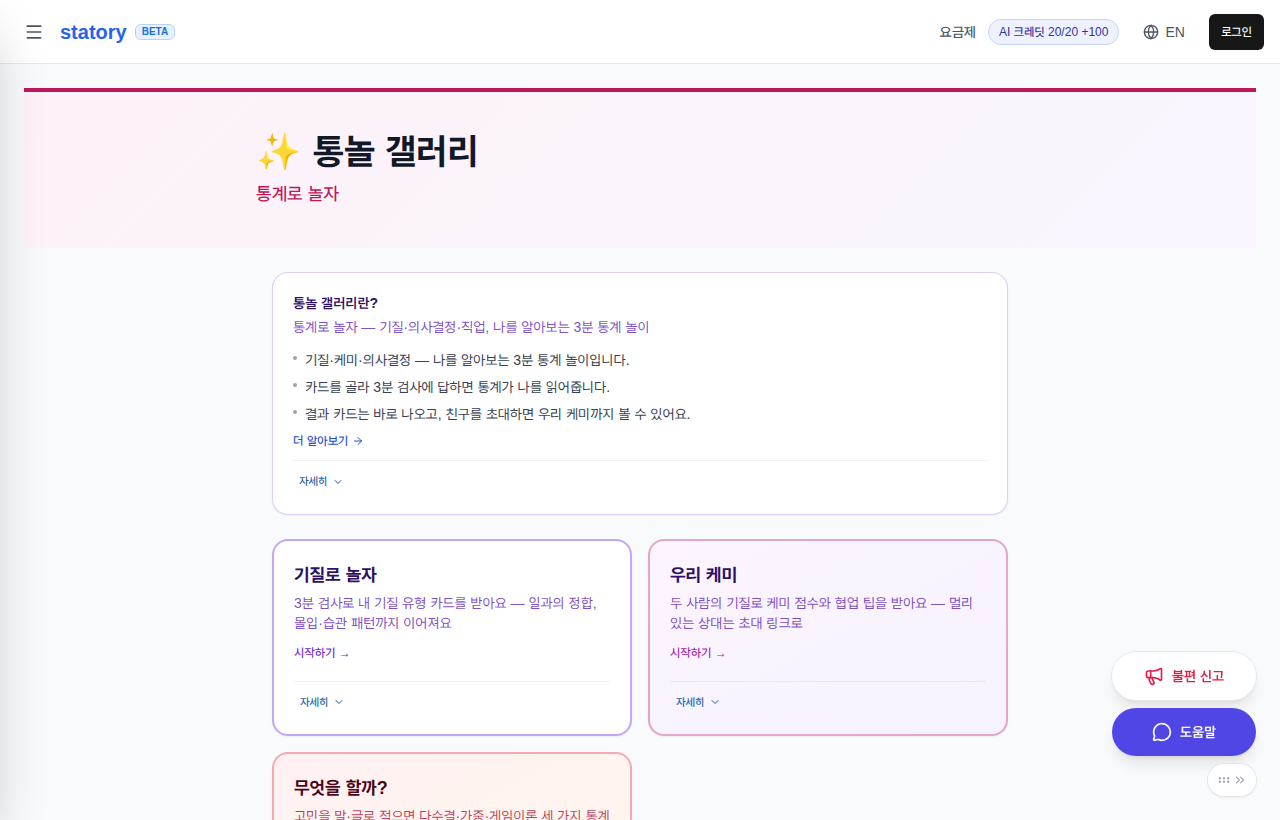
① The gallery shows everything on its first screen — the "Play with temperament" bundle (start with "What’s my temperament?", then work, immersion and chemistry) and the "What should I do?" bundle, with standalone plays below. Not fortune-telling: playful content grounded in statistics and psychology.
Play with temperament — about you
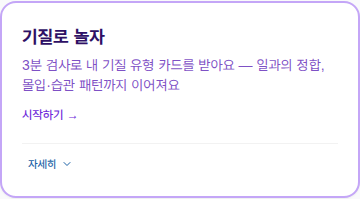
① Press this card in the gallery and a 3-minute temperament quiz opens — no right or wrong answers, just pick what feels closer to your usual self.
② Your answers become a temperament and personality card — one page on where you feel at ease and where things get tiring.
③ Then explore how your temperament fits with work, and with patterns of absorption and habit — a light look at which kinds of immersion or habits you may lean toward.
④ How to read it — a type is not a label that boxes you in, but "a description close to who you are right now". It is not a diagnosis or an assessment, and should not be used as a basis for health or medical decisions. The numbers on the card show your relative position among people who answered similarly, and may shift a little if you retake it. If a line resonates, just pick that one sentence and check it against your daily life.
What should I do? — your dilemma
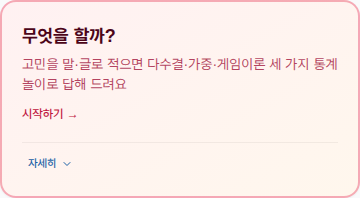
① Press this card in the gallery and describe your dilemma in plain words — "should I change jobs", "which of these three should we pick" is enough.
② Your dilemma is organized into alternatives and criteria, then answered three playful ways — majority vote, weighting (AHP: rank each criterion’s importance), and game theory (factoring in what the other side will choose).
③ How to read it — when all three agree, the choice is fairly solid. When they differ, the gap is the real question: it means you have not yet settled how much each criterion matters, so decide that first and look again. It does not decide for you; it makes your own criteria visible.
Our chemistry — between two people
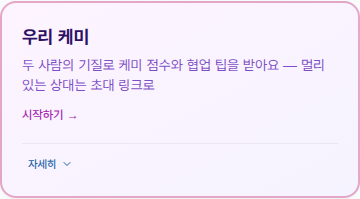
① Press this card in the gallery to put two temperament results side by side — if you already played "What’s my temperament?", it reuses that result.
② If the other person is not with you, send an invite link — once they finish on their own device, the results are joined and the chemistry is computed.
③ How to read it — the chemistry score is not a verdict of "compatible or not", but a map of where two temperaments tend to clash and where they mesh. A low score does not mean a bad relationship; it means you find ease in different ways, and the collaboration tips are suggestions for handling that difference.
Curious about statistics concepts? See Learn statistics.